
Put requirements and unresolved questions in the same brief
Tell the provider the activity, hours, expected use and any known access needs. Explain which permanent bathrooms are actually available. Ask the responsible organizer or site professional to identify applicable accessibility requirements; avoid asking guests or workers to disclose private medical information just to plan facilities.
List what remains unknown as well as what is agreed. For example, the unit model may be undecided, a proposed ground surface may need review, or the washing equipment may not yet be specified. Leaving those items visible prevents a provisional suggestion from becoming an assumed accessible solution.
Compare complete arrangements, not isolated products
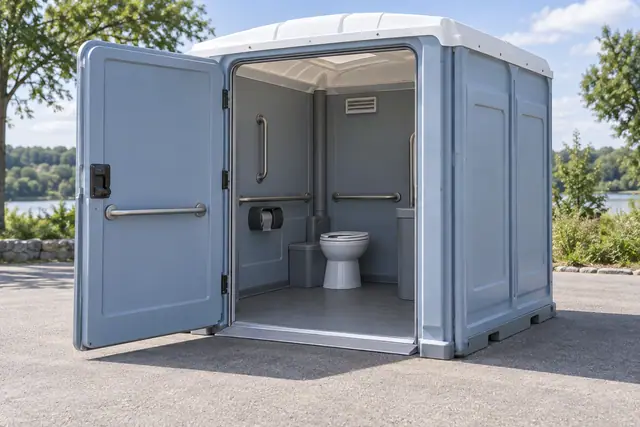
Ask for the offered model’s actual entrance, internal space and support features, then evaluate it at a proposed position. A wider cabin or accessibility symbol alone is not proof that the entire installation is suitable. An accessible-style tank-based toilet also does not automatically include flushing, a basin or every comfort feature of an enhanced model.
Compare the complete journey from the activity or arrival point through gates and changes in surface or level to the door and usable interior. Include a washing point that the intended users can approach and operate. If one combination cannot work, discuss another approved location or suitable equipment arrangement; do not try to solve a site problem by ordering a different label or improvising a ramp.
Record what each party is agreeing to provide
The property contact should agree the standing position and approach, including the space needed for entrance operation and waiting. The provider must review equipment handling and later service access. Document unresolved site work or operating responsibilities before accepting the arrangement; delivery of a cabin by itself is not certification of the whole site.
Make the written rental scope identify equipment, dates, transport, cleaning, waste service and replenishment. For washing, include water, used-water, soap and drying supplies as appropriate. Assign a person to keep approaches unobstructed and report problems, while distinguishing those site duties from professional equipment maintenance. Review collection access as part of the same agreement.
Reopen the decision when the arrangement changes
A changed event layout, new work area or different expected users can invalidate an earlier placement decision. Tell the responsible contacts before moving equipment or adding barriers, decorations or stored materials around it. Ask whether the existing equipment, washing provision and route still serve the revised activity.
During use, report an obstructed approach, missing supplies or an equipment problem promptly. Identify the affected facility and the nature of the issue so the site and provider can agree a response. Where a facility is unusable, the organizer needs an appropriate alternative arrangement; an extra cleaning visit does not resolve every access problem.
Questions before you book
What if the preferred location cannot accommodate a usable arrangement?
Ask the property contact and provider to compare another approved position or suitable equipment option. Keep the access issue unresolved until the actual alternative has been assessed; do not improvise a ramp or relocation.
Do I need to collect private medical details from attendees?
Describe practical access needs and applicable requirements without collecting unnecessary medical information. The organizer and appropriate site professional can help specify the arrangement for review.
Does accepting a quote settle future layout changes?
No. A quote describes an agreed scope and setup. Revisit equipment, washing and routes with the responsible contacts if the activity, position or expected users change.