
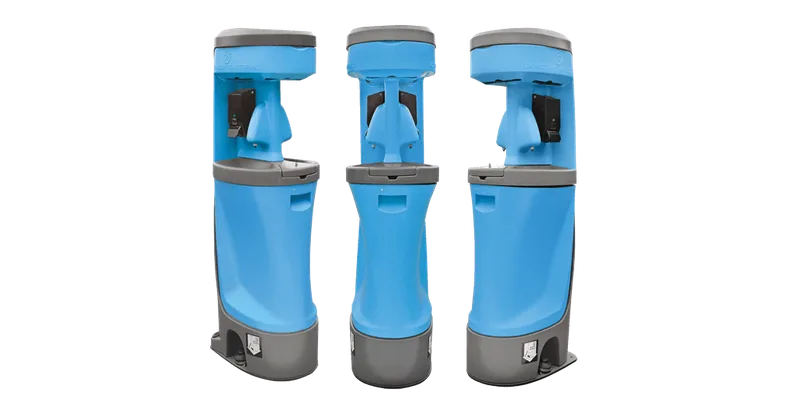
Identify which users the existing washing point would leave out
Ask the property contact who may use the building sink and during which hours. Walk the intended route from the outdoor work or gathering area, considering gates, restricted entrances and the people who need accessible use. A sink on the premises is not necessarily available to the group using the portable toilets.
Describe the uncovered period or group rather than reporting only that the property has a sink. Include setup and cleanup workers, additional activity areas and any changes expected during the hire. This establishes whether the request is for the main washing provision, a supplement for one zone or a temporary replacement when the building is unavailable.
Compare ways of closing that specific gap
Keeping an existing suitable sink available may address the need if the property accepts the users, hours and route. A separate portable station can be discussed where that arrangement is impractical. If several areas cannot share a usable approach, ask whether the proposal needs more than one washing position instead of assuming one central point serves everyone.
Compare the equipment functions explicitly. A station provides washing water, soap, drying provision and captured used-water handling according to the offered model; confirm its controls, supply method and any connection requirements. A standard cabin may not contain a basin, and sanitizer does not make it a soap-and-water washing point. No hot-water feature, tank capacity or accessible control is guaranteed by the category label.
Keep additional tasks separate from this choice. Drinking water, dishwashing and tool cleanup need their own suitable arrangements; do not count a handwashing rental as all of those facilities. Tell the provider which activity you intend rather than accepting an apparently convenient unit for a different purpose.
Resolve the dependencies before accepting an option
For the preferred arrangement, agree the position and standing surface, user approach, door or queue clearance and provider handling route. Confirm permission for any utility the model needs. A rental offer cannot keep a building unlocked, authorize use of a tap or prevent another supplier from blocking the approach; identify who controls each of those conditions.
Ask the offer to state initial supplies and the cleaning, clean-water replenishment, soap, drying supplies and used-water care included during the actual rental period. Name who checks usability between visits and how an issue or additional service request is raised. Neither unlimited refills nor a particular visit interval should be assumed.
Include delivery and collection within the property’s accepted windows and clarify the related hire and service terms. Compare another option if a required condition cannot be met. An inexpensive station without permitted access or an agreed water-care arrangement is not equivalent to a complete workable proposal.
Reconsider the choice when the original conditions change
If the building closes earlier, another crew arrives or the activity moves, check whether the accepted arrangement still reaches the intended users. Send that change to the provider and property contact. The answer may involve another position, revised supplies or different care; it should not be an unapproved move or an improvised connection.
Report a full, damaged or unusable station through the agreed process and follow the provider’s instructions. Do not empty used water onto the ground, into another rental or an unapproved drain. Keep the planned collection route available until removal, and let the provider handle the equipment under the accepted arrangement rather than draining it yourself at the end.
Questions before you book
Do I need a station if the property already has a sink?
Check who may use that sink, its opening hours and the actual route. Discuss a rental for the remaining gap rather than assuming either that every site needs one or that a building sink always makes one unnecessary.
Can one central station serve separate activity areas?
Describe the routes and user groups first. A central position only helps where those people can actually reach and use it without obstructing other activity; discuss the proposed arrangement with the property contact and provider.
What if the building washing point closes partway through the event?
Tell the provider and organizer when it closes and who remains. The proposal should address that period explicitly rather than assume the original arrangement continues unchanged.
Does a station shown in an offer include all water and supply care?
Ask for the exact initial supplies, replenishment, cleaning and used-water responsibilities. The equipment description alone does not establish who performs each task or how extra service is requested.